
The morning-after pill is an emergency prescription medicine taken after sex to lower the chance of pregnancy, and this column covers how to take it and what side effects to expect. In short, it works better the sooner it is taken, so ideally it should be taken within 24 hours, and levonorgestrel-type pills must be taken within 72 hours (3 days) at the latest. Because it contains hormones more than 10 times as strong as the regular birth control pill, it should be used only when truly needed.
01
How is the morning-after pill different from a regular birth control pill?
Key point
The morning-after pill is an emergency prescription medicine taken after sex to lower the chance of pregnancy. Unlike the regular pill taken every day, it uses a hormone dose more than 10 times higher. It cannot replace routine contraception and is meant only for urgent situations.
Among contraceptive pills, the regular birth control pill is taken at the same time every day, starting before sex. It prevents pregnancy by adjusting the levels of oestrogen and progesterone, the hormones involved in menstruation and pregnancy, which suppresses ovulation and thickens the cervical mucus so that sperm cannot pass through.
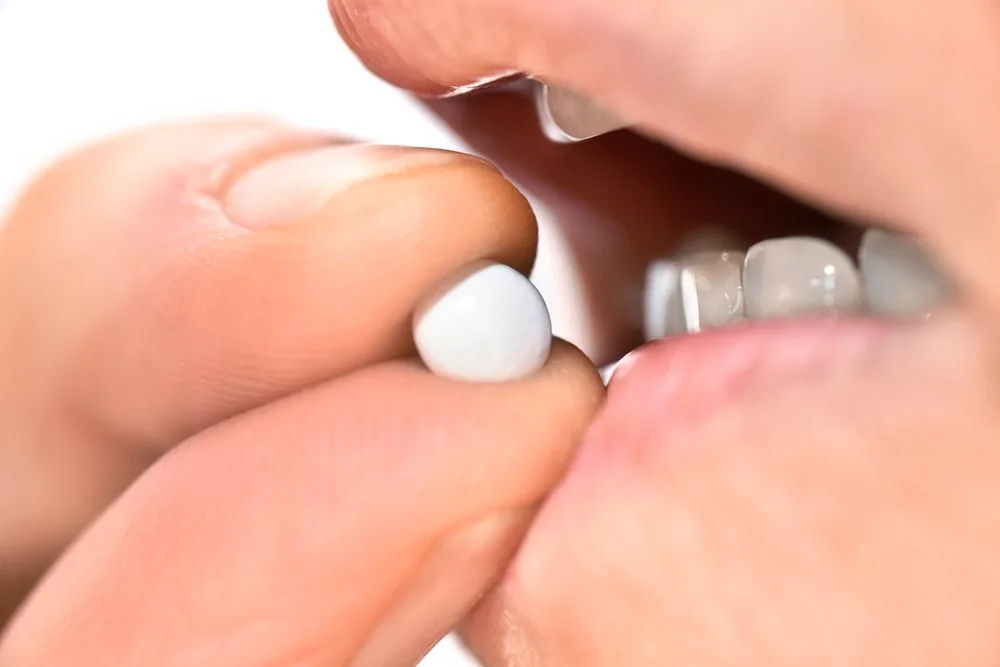
The morning-after pill is taken after sex to lower the chance of pregnancy, and it contains hormones more than 10 times as strong as the regular pill. Because this high-dose hormone works by blocking or delaying ovulation, the morning-after pill places a greater burden on the body than the regular pill.
- Timing — the regular pill is taken every day starting before sex, while the morning-after pill is taken after sex
- Hormone dose — the morning-after pill uses more than 10 times the hormone of the regular pill
- Purpose — the morning-after pill is an emergency prescription medicine used only in urgent situations
02
How long after sex can the morning-after pill be taken?
Key point
The time limit depends on the active ingredient. Levonorgestrel-type pills are taken within 72 hours (3 days) of sex, and ulipristal-type pills within 120 hours (5 days). With either type, the sooner it is taken the more effective it is, so taking it within 24 hours is ideal.
The chance of preventing pregnancy falls as time passes, so how quickly the pill is taken after sex determines how well it works. It acts by blocking or delaying ovulation, and whatever the ingredient, earlier is more effective, so it should ideally be taken within 24 hours and at the latest within the time limit for that ingredient.
The morning-after pill is a prescription-only medicine containing a high dose of female hormones, so a prescription from an obstetrician-gynaecologist is needed. Because the suitable ingredient depends on how much time has passed since sex, it is important not to give up just because 3 days have passed, and to see a doctor as soon as possible.
- Levonorgestrel type — taken within 72 hours (3 days) of sex; it blocks ovulation
- Ulipristal type — taken within 120 hours (5 days) of sex; it delays ovulation
- What both share — both need a prescription, and both work better the sooner they are taken

03
What side effects can the morning-after pill cause?
Key point
Because of its high hormone dose, the morning-after pill can cause changes in the menstrual cycle, nausea and vomiting, headache and dizziness, breast pain and abdominal pain, and mood swings. It should therefore be prescribed after a consultation with a doctor, and after 1 dose it should not be taken again within a month.
The side effects of the morning-after pill come from its high hormone dose. Because it was made for urgent contraception, a strong dose of hormones enters the body all at once, which can bring changes in the menstrual cycle, digestive symptoms and emotional state, so a consultation with medical staff is needed before taking it.
After 1 dose of the morning-after pill, it should not be taken again within a month, and because misusing high-dose hormones can leave side effects, it should be taken only when truly needed. For anyone planning contraception in advance, oral contraceptive pills or another contraceptive procedure are a much safer choice.
- Menstrual cycle changes — the cycle may shift after taking the morning-after pill
- Nausea and vomiting — digestive symptoms that may appear after taking it
- Headache and dizziness — caused by the strong hormone dose
- Breast pain and abdominal pain — the breasts or abdomen may ache after taking it
- Mood swings — mood may rise and fall sharply after taking it
Doctor's view
How the doctor decides
Seeun Cho, Medical Director · Obstetrics & Gynecology Specialist
I first check how much time has passed since sex
Before prescribing the morning-after pill, I first check how many hours have passed since sex. The time limit differs by ingredient, within 72 hours or within 120 hours, and with either one, the sooner it is taken the more effective it is. So I use the time that has passed to decide which ingredient fits, and then advise the patient to take it straight away.
I ask whether it has been taken within the past month
I always ask whether the patient has taken the morning-after pill recently. Because it uses hormones more than 10 times as strong as the regular pill, it should not be taken again within a month of 1 dose. If there is a recent history, I do not simply prescribe the same pill again straight away; instead, I also discuss oral contraceptive pills for planned use or other contraceptive procedures.
I do not treat a change in the menstrual cycle alone as a sign of a problem
I do not conclude that something is wrong with the body simply because the menstrual cycle has changed after taking the morning-after pill. Changes in the cycle, nausea, headache and mood swings are side effects caused by the high hormone dose. So when I prescribe it, I explain in advance which symptoms may appear, and I tell patients to come back for another consultation if any symptom worries them.
Summary
In summary
The morning-after pill is an emergency prescription medicine that should be taken within 72 or 120 hours depending on the ingredient, and the sooner it is taken, the more effective it is. Its high hormone dose can bring side effects, and after 1 dose it should not be taken again within a month. When contraception is urgently needed, it is advisable to see an obstetrician-gynaecologist, ideally within 24 hours.
FAQ
Frequently asked questions
Can the morning-after pill be bought without a prescription?
No, it cannot be bought without a prescription. It is a prescription-only medicine containing a high dose of hormones, so a prescription from an obstetrician-gynaecologist is needed.
Is it too late to take the morning-after pill once 3 days have passed since sex?
It depends on the ingredient. Levonorgestrel-type pills are taken within 72 hours (3 days) and ulipristal-type pills within 120 hours (5 days), so it is important to see a doctor quickly.
Can the morning-after pill be taken twice in a month?
After 1 dose of the morning-after pill, it should not be taken again within a month. For everyday contraception, planning ahead with oral contraceptive pills or a contraceptive procedure is the safer approach.